Göbekli Tepe: The Ancient Stone Enigma That Changed Our Understanding of Civilization
Göbekli Tepe, whose name means “Potbelly Hill” in Turkish, contains monumental stone structures dating back approximately 11,600 years, to a time when human communities still relied primarily on hunting, fishing and gathering. Located in southeastern Anatolia, some 20 kilometres northeast of the modern Turkish city of Şanlıurfa, this remarkable archaeological site has fundamentally transformed the scientific debate surrounding the development of human society.
The oldest known structures at the site date from the Pre-Pottery Neolithic period, before the invention of pottery and before agriculture became the economic foundation of communities in the region. At the time of their construction, there were no cities in the later historical sense, no developed writing systems, no states and no monumental complexes comparable to those associated with the Egyptian or Mesopotamian civilisations. Yet the people of this era were capable of quarrying and shaping limestone blocks weighing several tonnes, producing monumental pillars, organising their transportation and erecting architecturally sophisticated structures.
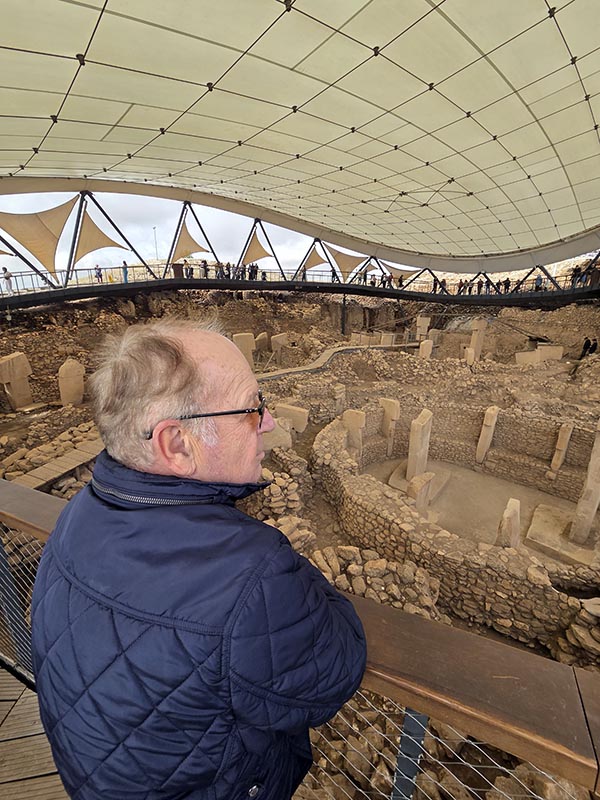
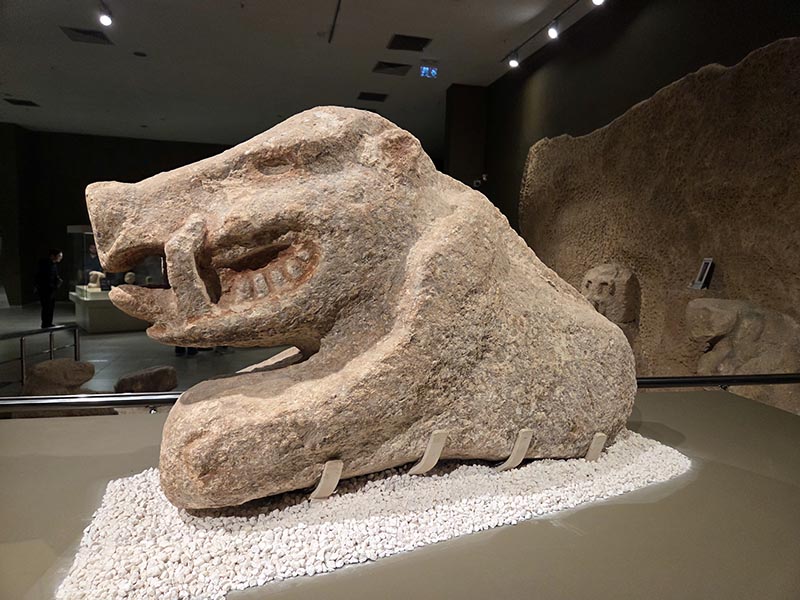
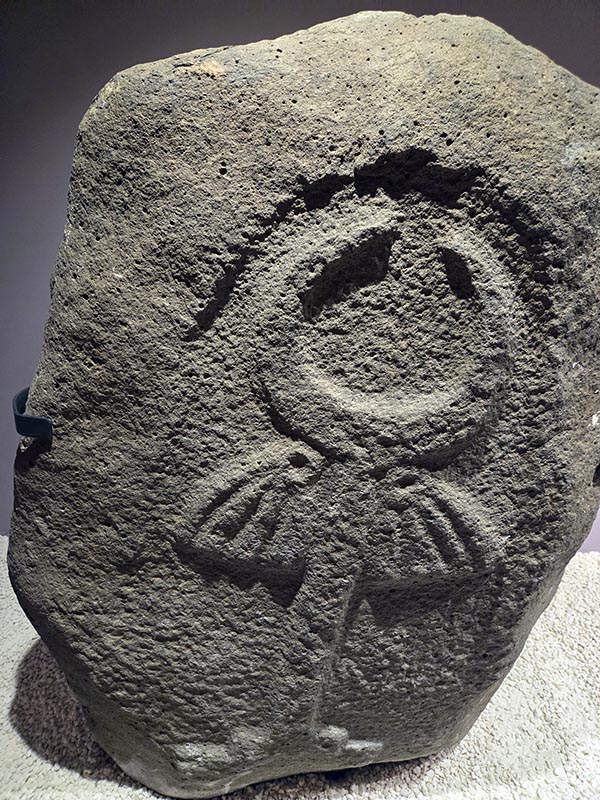
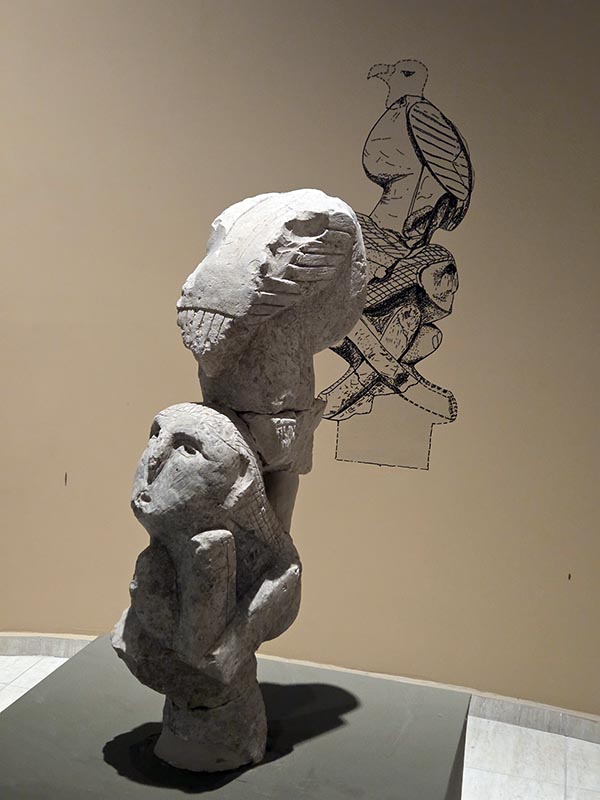
They decorated the surfaces of these monuments with abstract and animal imagery, demonstrating a highly developed capacity for symbolic expression. Among the animals depicted are foxes, snakes, wild boars, gazelles, bulls, birds and scorpions, alongside other motifs. These people had neither iron nor bronze tools at their disposal. Instead, they relied on stone implements, hammers, chisels and other relatively simple technologies. Nevertheless, the results they achieved reveal an extraordinary level of craftsmanship.
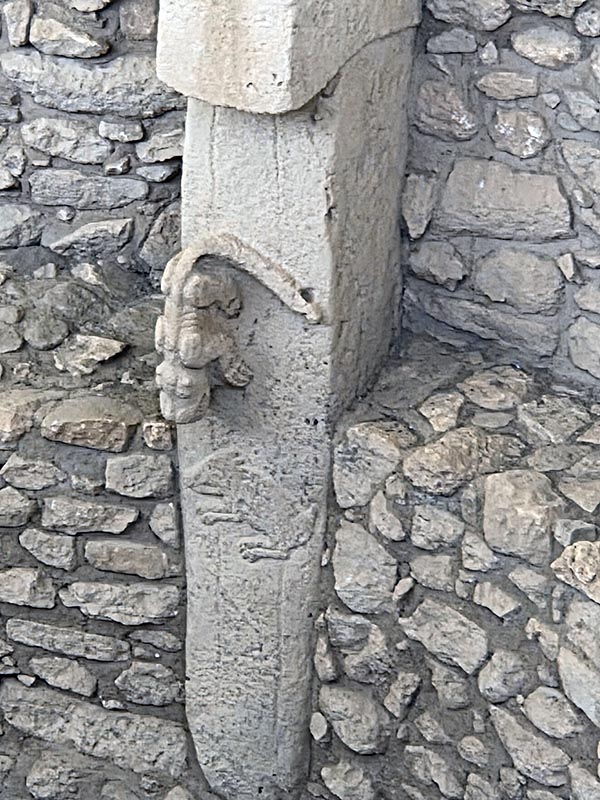
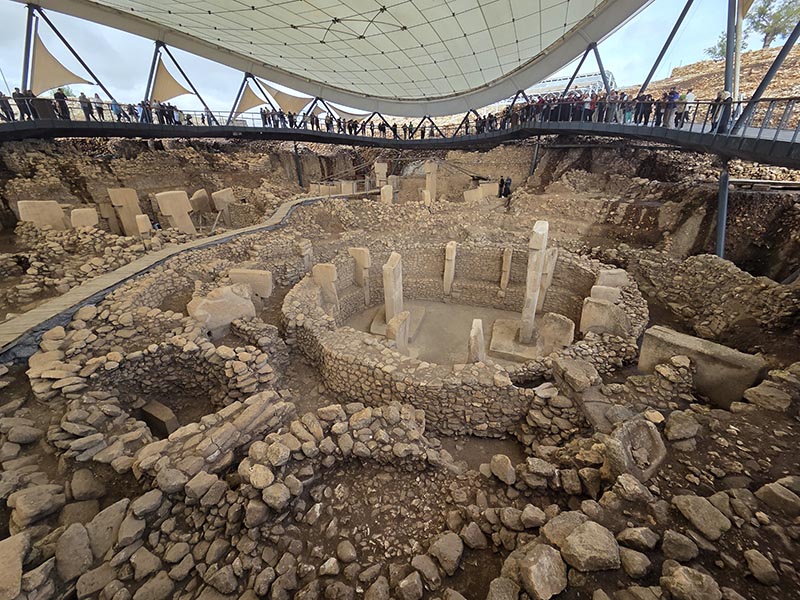
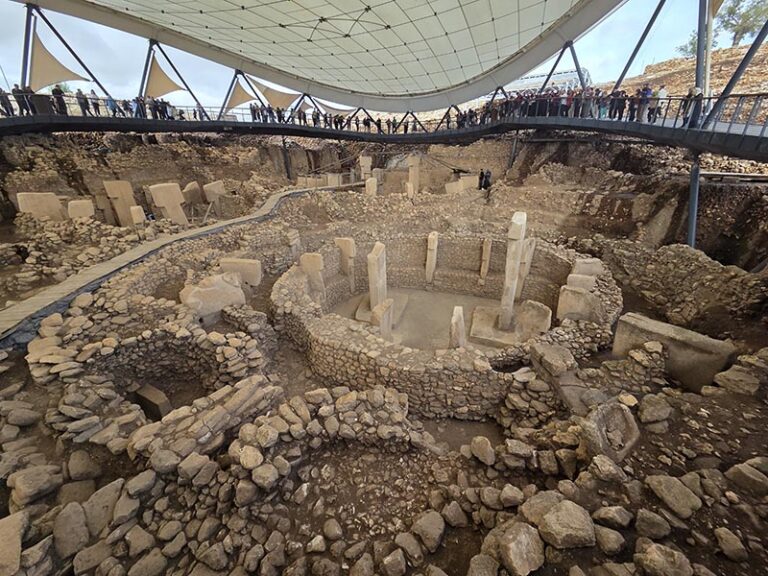
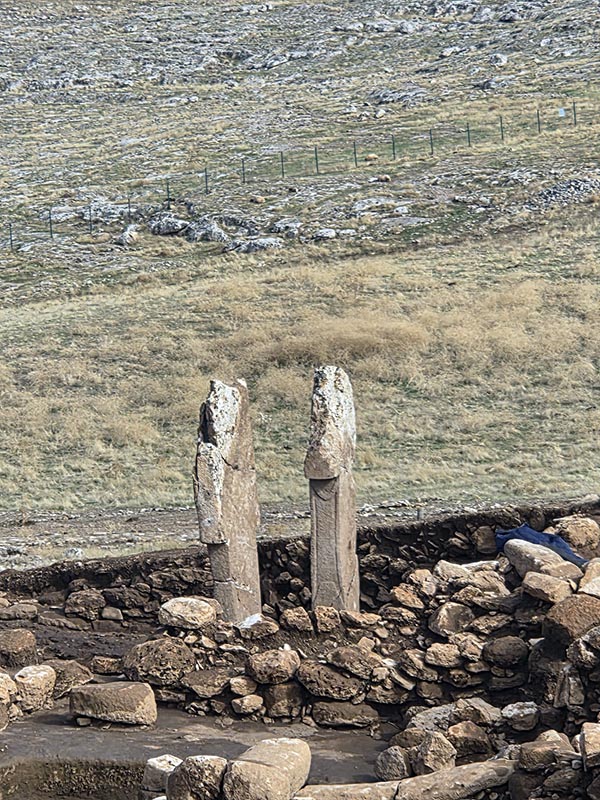
The site’s most recognisable features are its monumental T-shaped limestone pillars, some reaching approximately 5.5 metres in height. Carved from locally quarried limestone, their size and weight required a carefully organised process of extraction, shaping and transportation. These pillars were not simply isolated monuments randomly placed within the landscape. In the larger structures, they formed integral elements of carefully conceived architectural ensembles.
A typical building contained two large central pillars surrounded by smaller pillars positioned along the inner perimeter of the walls. The walls themselves were made of stone and, in some cases, incorporated built-in benches. Certain pillars clearly feature representations of arms, hands, belts and clothing. This has led archaeologists to interpret the T-shaped form as a stylised human figure, with the horizontal section representing the head and the vertical section the body. This interpretation is also reflected in UNESCO documentation.
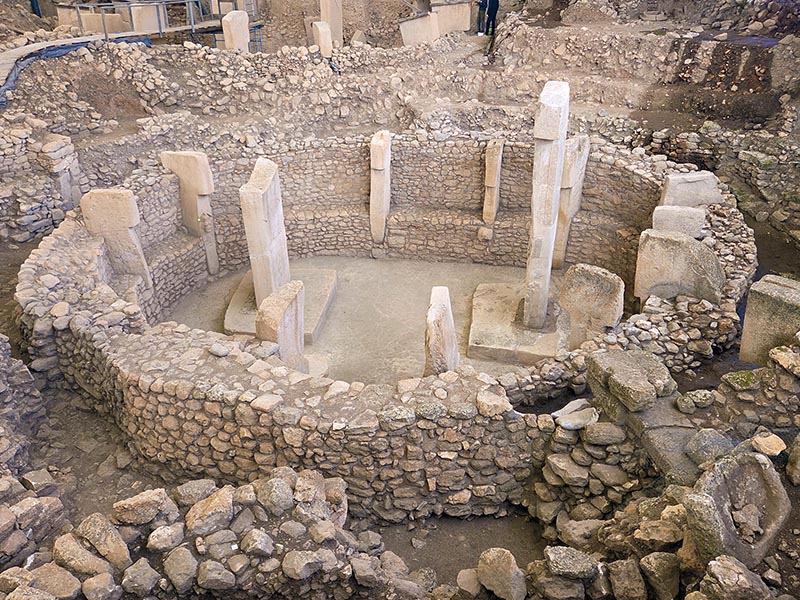
The discovery of Göbekli Tepe has transformed one of the most important questions in prehistoric archaeology: did complex social organisation and collective ritual practices precede agriculture, or did they develop alongside it? Some researchers now suggest that agriculture may have emerged partly in response to the need to feed larger groups of people gathering regularly at particular locations. This challenges older theories that assumed agriculture had to come first, providing the economic basis for permanent settlements and increasingly complex societies.
Göbekli Tepe was inscribed on the UNESCO World Heritage List in 2018. UNESCO recognises its exceptional monumental architecture, innovative construction techniques and significance for understanding Pre-Pottery Neolithic societies. It is the achievement of Stone Age communities whose capabilities and social organisation were considerably more sophisticated than previously assumed.
Was Göbekli Tepe a Temple, a Sanctuary or a Settlement?
This remains one of the central questions in contemporary archaeological debate. Was Göbekli Tepe a temple, a sanctuary or a settlement?
German archaeologist Klaus Schmidt believed that the monumental structures primarily served a ritual purpose. Their impressive dimensions, central pillars, rich iconography and distinctive architectural organisation supported his interpretation of Göbekli Tepe as a place where people gathered to perform ceremonies and rituals.
Although enormously influential, this interpretation has not gone unchallenged. Archaeologists have also identified smaller structures that may be associated with everyday life. Traces of activities not necessarily connected with religious ceremonies have been discovered, and some buildings may have served residential purposes.
The most cautious conclusion is that Göbekli Tepe was a multifunctional social space, containing monumental communal buildings of particular significance.
Who Built Göbekli Tepe?
Archaeology cannot tell us the names, language or political system of the people who built Göbekli Tepe. They left no written records, and their social organisation must therefore be reconstructed from the material evidence they left behind.
Nevertheless, the architecture itself provides important clues. Constructing such large stone structures required organised labour, an understanding of materials, careful planning and the coordination of considerable numbers of people.
The undertaking may have involved different forms of cooperation: skilled stoneworkers, individuals responsible for organising transportation, people tasked with gathering food, and members of the community who held particular social or ritual authority. However, there is no evidence allowing us to establish the existence of a king, an organised priesthood or a hereditary ruling class.
Taş Tepeler: A Wider Neolithic Landscape
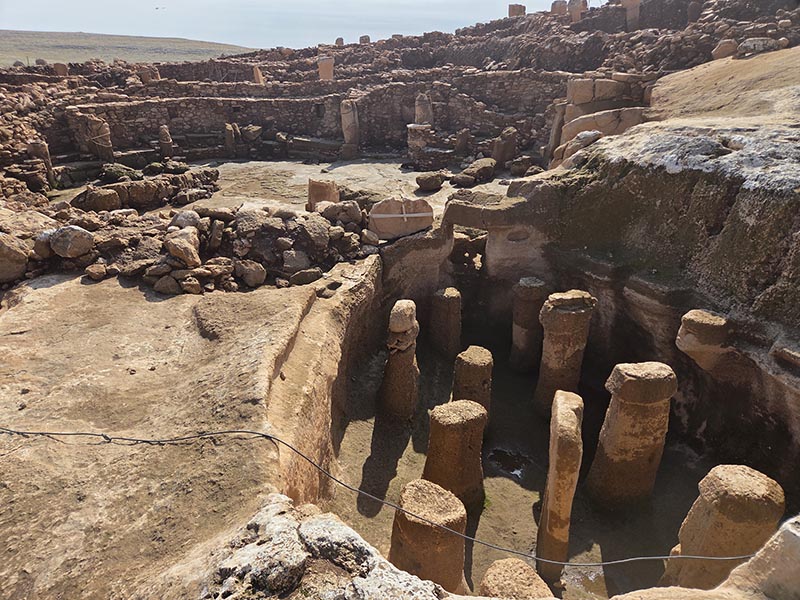
A number of archaeological sites belonging to the same or a closely related cultural context have been discovered across the wider Şanlıurfa region.
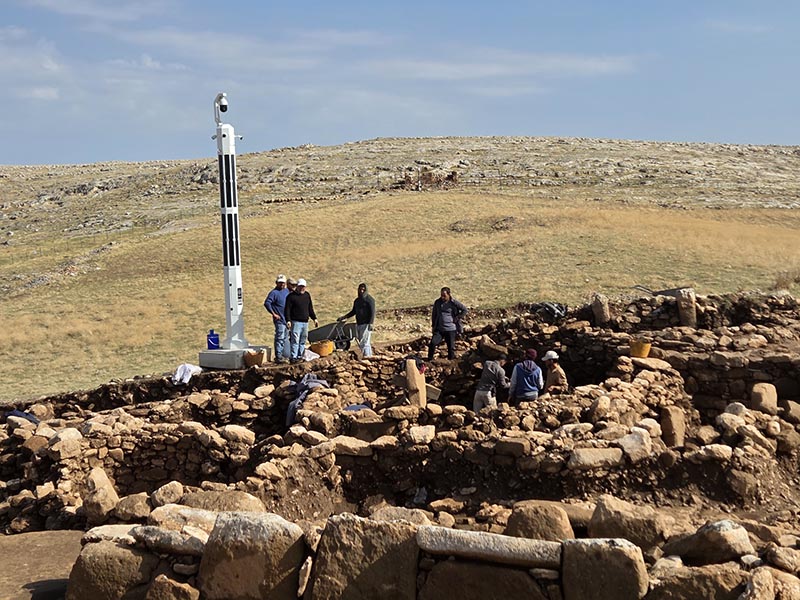
Today, this area is the focus of the Taş Tepeler project, whose name translates from Turkish as “Stone Hills”. The research initiative encompasses the investigation of numerous Neolithic sites, buildings, sculptures, stone artefacts and traces of everyday life. It includes as many as eleven archaeological sites, the best known of which, alongside Göbekli Tepe, is Karahan Tepe.
During my visit to Karahan Tepe, I had the opportunity to meet Professor Necmi Karul, a prominent Turkish archaeologist and academic specialising in the Neolithic period and the prehistoric cultures of Anatolia. He is also the coordinator of the Taş Tepeler project and leads archaeological excavations at Göbekli Tepe and Karahan Tepe.
During our conversation, he explained some of his views:
“Modern humans often underestimate the capabilities of prehistoric people. It is wrong to explain their achievements through extraterrestrial intervention rather than by understanding their actual abilities. Stone Age people possessed knowledge and skills that should not be underestimated simply because they did not have access to modern technology.”
Professor Karul also emphasised that no concrete archaeological evidence has been found to support the claim that Göbekli Tepe was an astronomical observatory, as suggested by certain alternative theories.
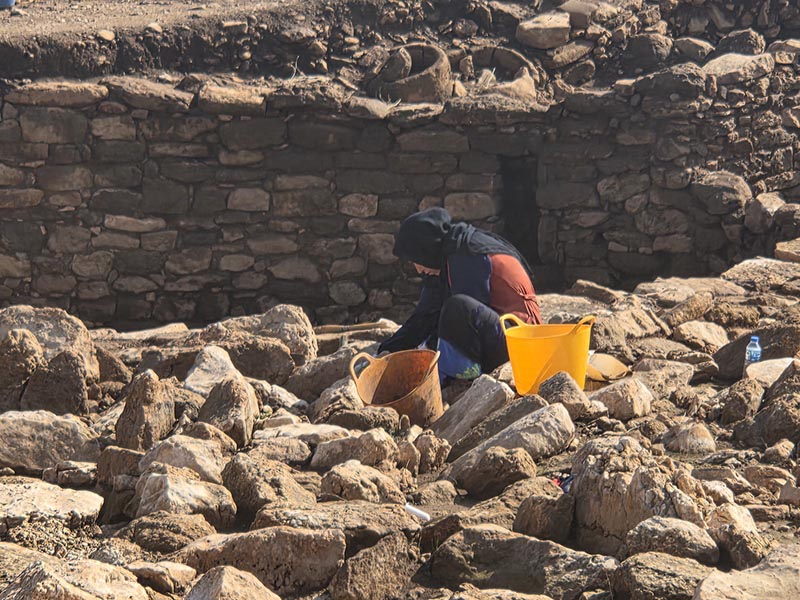
According to Karul, the buildings had roofs, and traces of wooden roofing structures have also been identified. This is significant because it challenges the assumption that the structures were open-air spaces specifically designed for systematic observation of the night sky.
Göbekli Tepe and the other sites in the region may not literally represent the birthplace of civilisation, but some of the most important early steps in its development undoubtedly took place here.
Karul also pointed out that the people of this region hunted wild animals, began domesticating certain species and gradually developed agriculture. He particularly stressed that the animal depictions, sculptures and stone reliefs reflect a world in which human beings maintained a much more immediate relationship with nature.
In his interpretation, the achievements of these communities were the result of human knowledge, experience and ingenuity, rather than any form of external intervention.
The Most Popular Theories and Speculations Surrounding Göbekli Tepe
Over the years, Göbekli Tepe has attracted considerable attention not only from archaeologists but also from proponents of alternative history, ancient mysteries and conspiracy theories. Its extraordinary age and monumental architecture have provided fertile ground for speculation.
1. Ancient Aliens and Extraterrestrial Intervention
One of the most widely circulated theories, popularised by television programmes such as Ancient Aliens, claims that people living 12,000 years ago could not possibly have constructed such monumental buildings or produced pillars of such precision. According to this theory, extraterrestrial beings either helped them build the structures or provided them with the necessary knowledge.
There is no archaeological evidence supporting these claims.
2. Graham Hancock and a Lost Advanced Civilisation
British author Graham Hancock argues that an advanced civilisation existed before the end of the last Ice Age but disappeared following a major catastrophe. According to his hypothesis, survivors passed their knowledge on to later human communities.
Göbekli Tepe is sometimes presented as one of the possible traces of this supposedly lost civilisation. However, no confirmed archaeological evidence supports the existence of such a prehistoric advanced society or its alleged connection to the site.
3. An Ancient Astronomical Observatory
Another theory suggests that the arrangement of the pillars and their animal reliefs represent constellations and celestial phenomena. Some authors argue that the people who built Göbekli Tepe observed the stars, tracked seasonal changes and recorded astronomical events.
One particularly controversial interpretation suggests that Pillar 43, often referred to as the Vulture Stone, depicts a comet impact around 10,950 BC. This hypothesis has attracted attention but remains disputed and is not an established archaeological conclusion.
4. Energy Centres, Portals and Ancient Knowledge
Alternative and esoteric circles have also promoted claims that Göbekli Tepe was an energy centre, a portal to other dimensions or a place where ancient people possessed secrets that modern science has yet to uncover.
Such interpretations belong to the realm of speculation rather than evidence-based archaeology.
It is important to distinguish between alternative theories and legitimate scientific debate. Not every unconventional interpretation is automatically a conspiracy theory. Questions about whether Göbekli Tepe functioned as a ritual centre, a settlement or a meeting place for different communities remain entirely legitimate subjects of archaeological research. The same applies to certain hypotheses concerning astronomical symbolism.
However, claims involving extraterrestrial visitors, lost advanced civilisations and deliberate historical cover-ups belong to the realm of pseudoarchaeology when presented without credible evidence.
Ultimately, Göbekli Tepe does not need extraterrestrials, mythical civilisations or supernatural explanations to be extraordinary. Its real significance lies in what it reveals about the ingenuity, organisational abilities and symbolic world of human communities more than eleven millennia ago. It reminds us that the history of civilisation is considerably more complex than once believed — and that some of its most fascinating chapters are still being uncovered.
Where to Escape the Fall and Winter: The Best Destinations for Sun and Swimming, Month by Month